11 June 2026
Meeting CQC Cleaning Standards: A Guide for Healthcare Facilities
A clean and safe care environment is fundamental to patient safety and wellbeing. For healthcare facility managers across Hampshire and Southampton, navigating Care Quality Commission (CQC) regulations requires absolute precision. Achieving cqc cleaning standards isn’t just about a spotless environment; it is a fundamental pillar of patient safety and regulatory adherence.
To help you stay inspection-ready, this guide breaks down how professional cqc cleaning standards safeguard your facility, protect your reputation, and ensure smooth operational continuity.
What Are CQC Cleaning Standards?
The CQC does not issue a specific, standalone cleaning checklist. Instead, cqc cleaning standards are tied directly to Regulation 12 (Safe care and treatment) and Regulation 15 (Premises and equipment) of the Health and Social Care Act 2008.
To meet these healthcare cleaning regulations, providers must ensure that the premises are clean, secure, and properly maintained. In practice, inspectors measure your cleanliness against the National Standards of Healthcare Cleanliness (NSHC). To meet the mark, your facility needs a clear strategy that categorises areas by clinical risk, sets transparent cleaning frequencies, and tracks measurable efficacy scores.
Why Cleaning Matters During CQC Inspections
Cleanliness is one of the most visible indicators of a well-managed healthcare facility. A failed CQC inspection cleaning rating rarely stems from a single missed spot; it is usually the result of systemic infection control failures and poor cleaning standards healthcare teams failed to monitor. If a facility feels unkempt, inspectors will look much closer at clinical practices. Conversely, embedding consistent cqc cleaning standards into your daily routine builds immediate confidence with the inspection team.
Key Areas Inspectors Assess
During an inspection of healthcare premises cleaning, inspectors look at the environment through a patient-safety lens. They will closely examine whether your daily cqc cleaning standards thoroughly address:
- High-Frequency Touchpoints: Door handles, light switches, reception desks, patient seating, and call buttons.
- Clinical Treatment Rooms: Examination couches, medical equipment surfaces, and privacy curtains.
- Sanitary Facilities: Patient and staff toilets, sinks, and hand-washing stations.
- Flooring and Skirting: Corners, edges, and behind movable furniture where dust accumulates.
- Ventilation Grilles and Blinds: Often overlooked high-level areas that can harbor airborne dust and pathogens.
Infection Prevention and Control Requirements
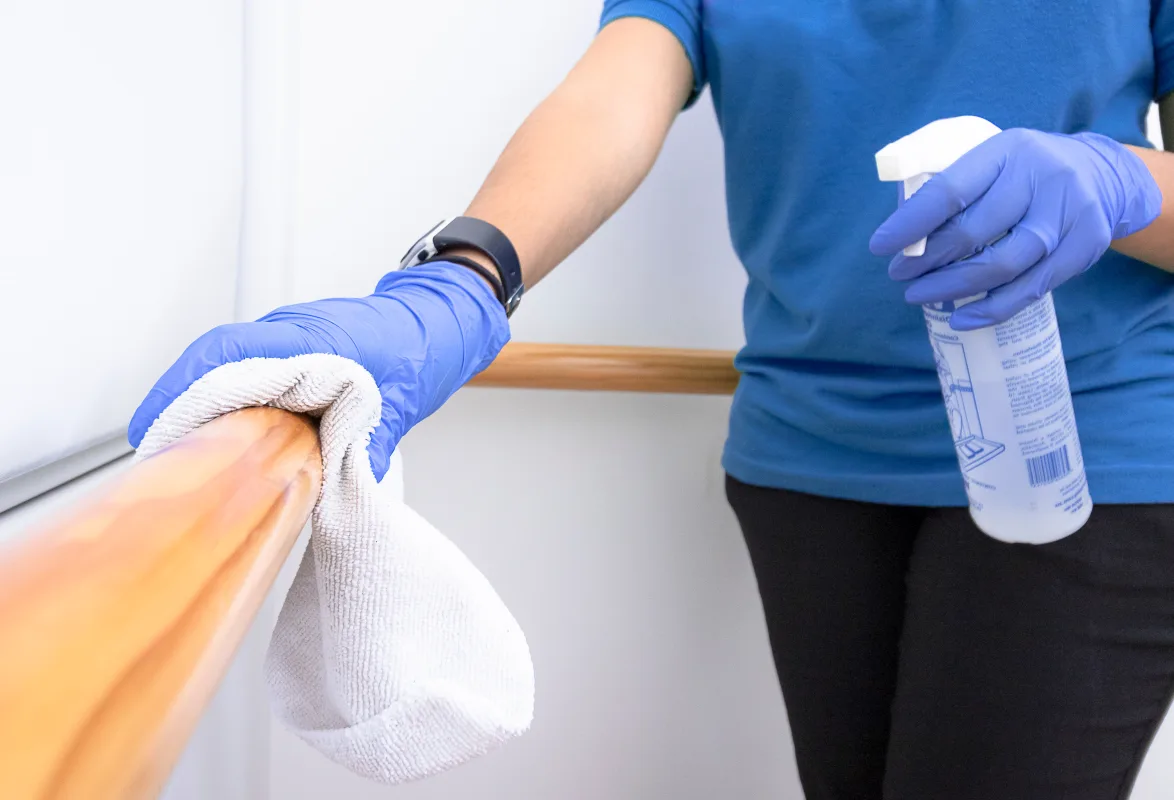
Meeting healthcare hygiene standards requires a bulletproof approach to infection prevention and control (IPC). An effective program built around cqc cleaning standards relies heavily on active cross-contamination prevention strategies.
Colour-Coded Cleaning Systems Explained
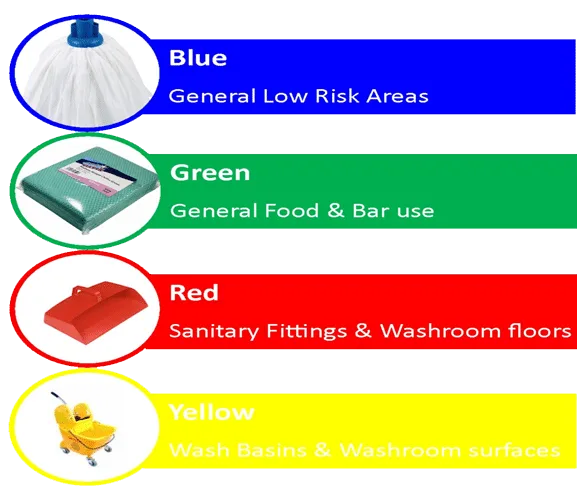
To eliminate cross-contamination, all cleaning materials (mops, buckets, cloths, and reusable aprons) must be strictly color-coded.
- 🔴 Red: Sanitary facilities, toilets, bidets, and bathroom floors.
- 🟡 Yellow: Clinical treatment areas, examination rooms, and medical surfaces.
- 🔵 Blue: General areas, waiting rooms, reception zones, and administrative offices.
- 🟢 Green: Kitchens, staff dining areas, and food preparation zones.
Chemical Safety & Disinfection (COSHH)
Your daily cqc cleaning standards must demonstrate full COSHH compliance (Control of Substances Hazardous to Health).
Logistics: All cleaning agents must be stored in a locked, dedicated COSHH cupboard. No chemical trolleys or bottles may be left unattended in public corridors.
Documentation: Up-to-date Safety Data Sheets (SDS) and risk assessments must be stored next to the chemicals.
Efficacy: Disinfectants must meet BS EN 1276 or BS EN 14476 standards. Staff must follow precise manufacturer contact times for virucidal and bactericidal actions to take effect.
Documentation and Audit Trails
If it isn’t documented, as far as the CQC is concerned, it didn’t happen. CQC evidence requirements place a heavy emphasis on a robust cleaning audit trail to back up your physical efforts to maintain cqc cleaning standards.
Your cleaning compliance documentation must include:
- Daily Cleaning Schedules: Explicitly detailing what needs to be cleaned, how often, and by whom.
- Signed Cleaning Records: Up-to-date logs proving schedules are being followed.
- Regular Hygiene Audits: Regular healthcare facility audits that score cleanliness levels against NSHC targets.
- Cleaning Risk Assessments: Documented rationales for why certain areas are cleaned at specific frequencies based on patient risk.
The Compliance Gap: Many facilities manage daily surface wiping well but fail to connect their operational cqc cleaning standards with verified paperwork. Ensure your audit logs are accessible, legible, and completely up to date.
Staff Training and Competency Requirements
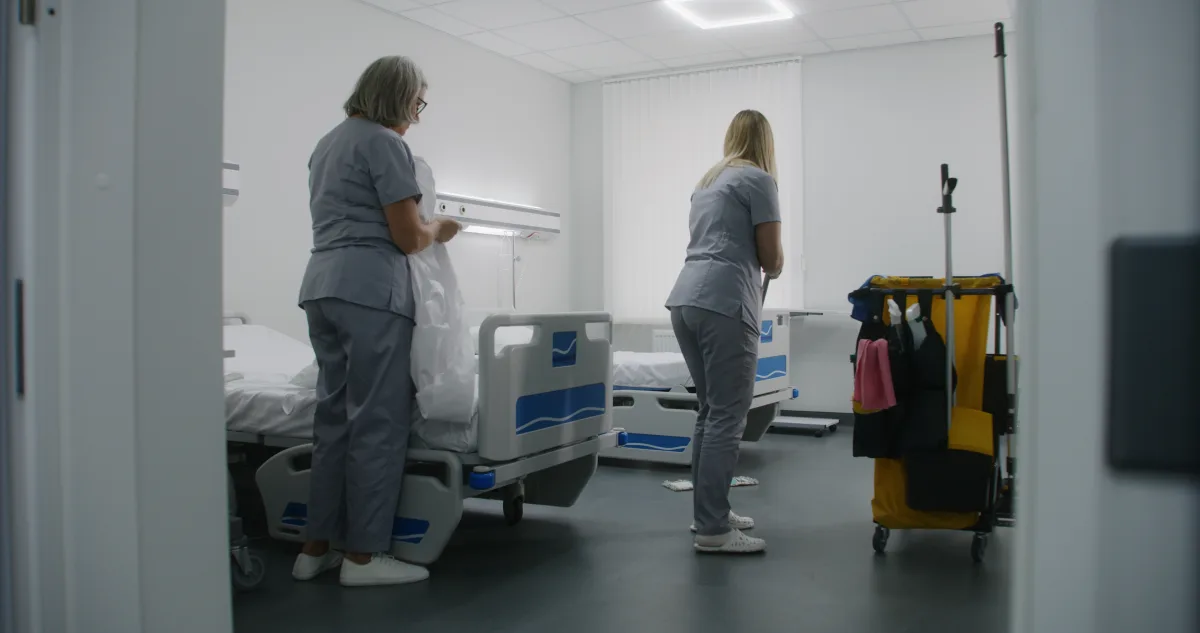
Whether you using an in-house team or an outsourced healthcare cleaning model, the people handling the cleaning are your first line of defense. To maintain verifiable cqc cleaning standards, inspectors will ask to see staff training records and documented competency assessments.
Cleaners in a clinical environment are not general commercial cleaners; they require specialist healthcare cleaning knowledge. To execute compliant cqc cleaning standards, training must explicitly cover IPC cleaning standards, safe healthcare waste management (segregation of clinical and domestic waste), blood and bodily fluid spill management, and the correct donning and doffing of Personal Protective Equipment (PPE).
Common Cleaning Issues Identified During Inspections
When facilities face healthcare compliance risks, it is usually due to a few recurring healthcare cleaning challenges that undermine their cqc cleaning standards. CQC reports frequently highlight:
- Torn or Damaged Seating: Fabric or vinyl tears on waiting room chairs or examination tables mean the surface can no longer be effectively disinfected.
- Dust on High-Level Surfaces: The tops of door frames, picture frames, and curtain rails.
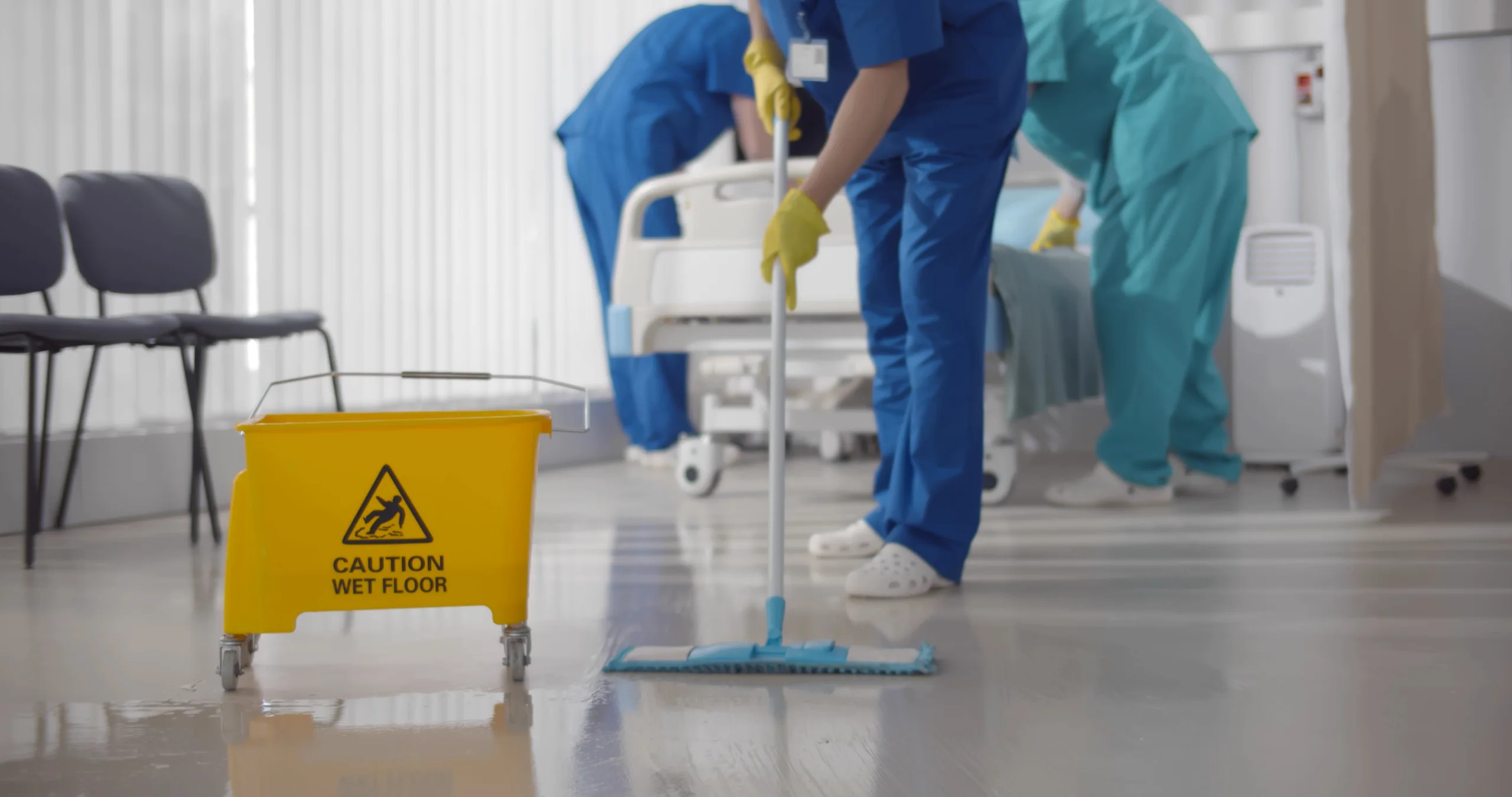
- Stained or Dirty Mop Heads: Cleaning with dirty equipment simply spreads bacteria around, defeating the purpose of proper sanitation.
- Gaps in Log Books: Missing signatures for weekends or bank holidays.
- Improper Chemical Storage: Leaving cleaning carts or chemical bottles unattended in public corridors.
How Professional Cleaning Contractors Support Compliance
Managing medical facility cleaning standards internally places a massive administrative and operational burden on healthcare estate management. Partnering with a professional healthcare cleaning contractor skilled in executing cqc cleaning standards mitigates these healthcare risk management headaches.
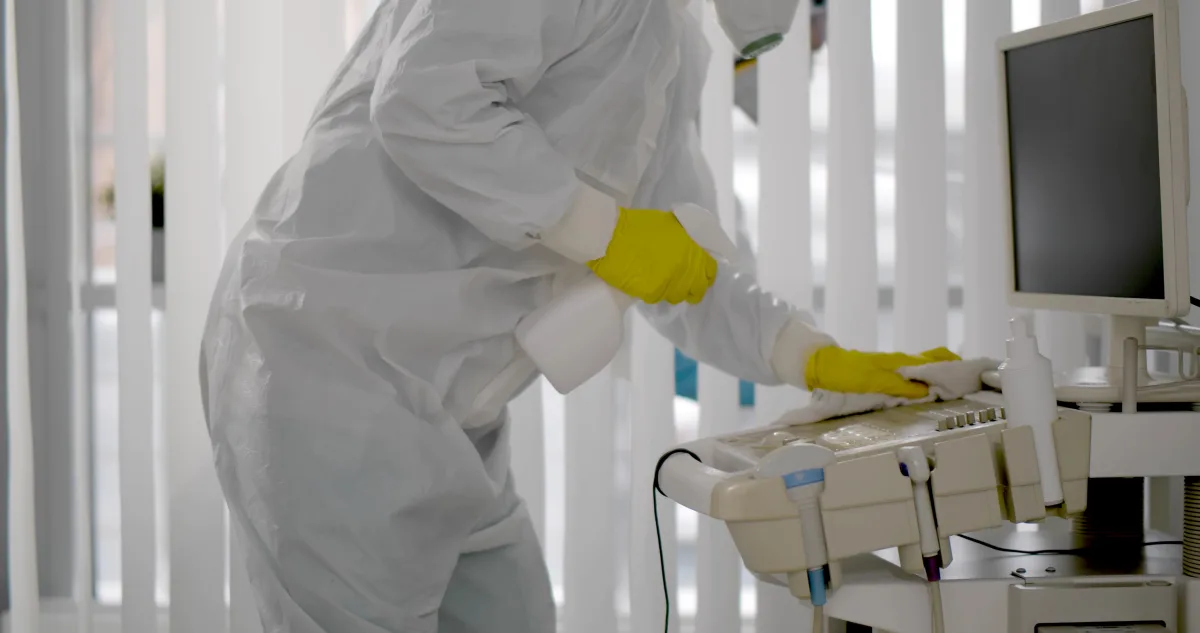
A specialist healthcare cleaning company provides a turnkey framework for compliance. They supply a fully trained workforce, handle the complexities of healthcare cleaning quality assurance, provide digital healthcare cleaning audit checklist systems, and ensure your facility is always stocked with COSHH-compliant solutions. From routine GP surgery cleaning to intensive healthcare deep cleaning, an expert provider adapts to your specific risk categories to deliver flawless cqc cleaning standards day in and day out.
Looking for a trusted healthcare cleaning partner in and around Hampshire?
At Bradfield Facility Management, we provide cleaning solutions tailored to the strict demands of not only the medical, but also in a range of other sectors. Whether you manage a busy doctor surgery cleaning schedule, a dental practice cleaning regimen, a care home cleaning facility, or an NHS facility cleaning contract, our professional healthcare cleaners in Southampton and across Hampshire are ready to support you.
Contact Bradfield Facility Management today to request a bespoke healthcare cleaning solutions consultation and safeguard your next inspection with industry-leading cqc cleaning standards.